

What Does “Facebook Account Restricted from Advertising” Actually Mean?
When Facebook restricts an account from advertising, it means one or more of the following actions has occurred:- The ad account is disabled or limited
- The Business Manager loses advertising privileges
- The personal profile is blocked from creating or managing ads
- Spending is frozen due to perceived risk
Why Facebook Restrictions Often Appear “Random”
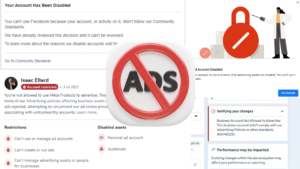 Facebook’s ad enforcement system is not rule-based alone. It is heavily driven by risk scoring models that evaluate behavior patterns rather than isolated actions.
This means an account can be restricted even if:
Facebook’s ad enforcement system is not rule-based alone. It is heavily driven by risk scoring models that evaluate behavior patterns rather than isolated actions.
This means an account can be restricted even if:
- No ads were rejected
- No policy warning was issued
- No manual review occurred
The Core Issue: Ad Account Stability, Not Policy Violations
Many advertisers focus only on policy compliance, but Facebook prioritizes account stability just as much, sometimes more.Key Stability Factors Facebook Tracks Internally
Although Meta does not publish these metrics, experienced advertisers consistently observe the following risk signals:- Irregular login behavior (IP, device, or geo inconsistency)
- Sudden changes in account ownership or permissions
- Abnormal spending patterns or rapid budget scaling
- Payment method volatility or repeated billing failures
- Asset churn (frequent page, BM, or ad account changes)
- Association with previously restricted assets
Common Scenarios Where Accounts Get Restricted “for No Reason”
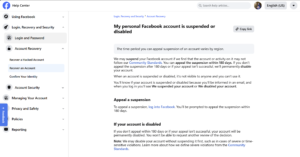
1. Sudden Scaling Without Historical Trust
Rapid budget increases on accounts with limited spend history are one of the most common triggers. Even legitimate scaling can look risky if the account lacks sufficient spending reputation.2. Business Manager Instability
Facebook evaluates Business Managers as ecosystems, not isolated entities. Issues arise when:- Multiple ad accounts are added or removed quickly
- Admin roles change frequently
- Assets are shared across unrelated profiles
- The BM has links to previously disabled accounts
3. Payment Threshold & Billing Behavior Issues
Frequent payment retries, threshold resets, or mismatched billing details can cause automatic restrictions even if payments eventually succeed. Billing instability is treated as financial risk, not just a technical issue.4. Profile-Level Trust Problems
Many advertisers overlook this: Your personal Facebook profile still plays a critical role. Signals that reduce profile trust include:- New or lightly aged profiles
- Minimal organic activity
- Inconsistent login environments
- Security challenges or checkpoints in the past
5. Asset History Contamination
Facebook links assets at multiple levels:- Ad accounts
- Pages
- Domains
- Pixels
- Payment methods
Why Appeals Often Fail (and Sometimes Make Things Worse)
When an account is restricted, many advertisers immediately submit appeals—sometimes repeatedly. This approach can backfire.Common Appeal Mistakes
- Submitting multiple appeals in a short time
- Appealing without fixing underlying stability signals
- Providing inconsistent or low-quality information
- Attempting appeals from unstable login environments
The Correct Mindset for Account Recovery
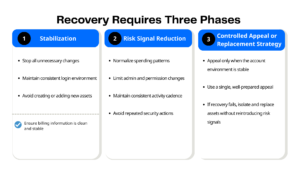 Successful recovery is less about “convincing Facebook” and more about reducing perceived risk.
Recovery Requires Three Phases
1. Stabilization
- Stop all unnecessary changes
- Maintain consistent login environment
- Avoid creating or adding new assets
- Ensure billing information is clean and stable
2. Risk Signal Reduction
- Normalize spending patterns
- Limit admin and permission changes
- Maintain consistent activity cadence
- Avoid repeated security actions
3. Controlled Appeal or Replacement Strategy
- Appeal only when the account environment is stable
- Use a single, well-prepared appeal
- If recovery fails, isolate and replace assets without reintroducing risk signals
Why Some Accounts Never Recover
Not all restrictions are temporary. Accounts may be permanently restricted if Facebook classifies them as:- Structurally unstable
- High-risk due to asset association
- Financially unreliable
- Pattern-based abusers (even unintentionally)
Prevention Is More Valuable Than Recovery
Experienced advertisers focus less on recovery and more on long-term account resilience. Key prevention principles include:- Gradual spend growth
- Minimal asset churn
- Clean separation between projects
- Stable payment infrastructure
- Predictable operational behavior
Final Thoughts
When a Facebook account is restricted from advertising for no reason, the real cause is almost never “nothing.” It is usually the result of invisible stability metrics, risk accumulation, and asset-level trust evaluation. Understanding these hidden mechanics is essential for:- Agencies managing high budgets
- Advertisers in competitive or sensitive niches
- Teams running long-term scaling operations